Scuba Club dives deep into conservation and discovers community
On a night dive in the Belize Barrier Reef, FIU Scuba Club members waved their arms enthusiastically. They giggled – gurgled, really – and stared at one another. Waiting. “We looked absolutely ridiculous,” says junior Sofia Herrero de la Cruz.
After several minutes, it happened: bioluminescence. The underwater world enveloped them in a bright array of neon blues and greens as algae began to glow through a natural chemical reaction. “It was so incredible,” Herrero de la Cruz recalls, and a literal highlight of her trip.
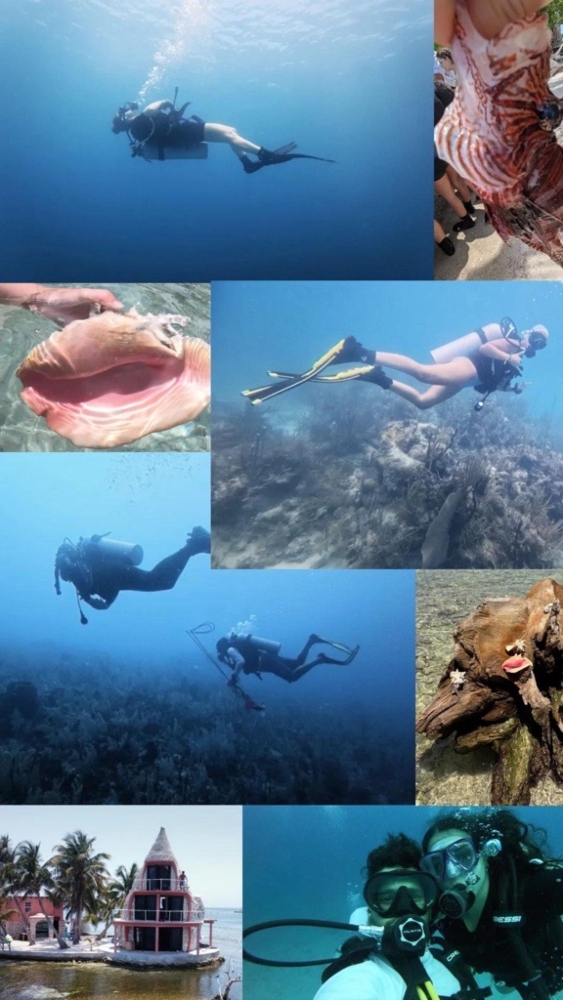
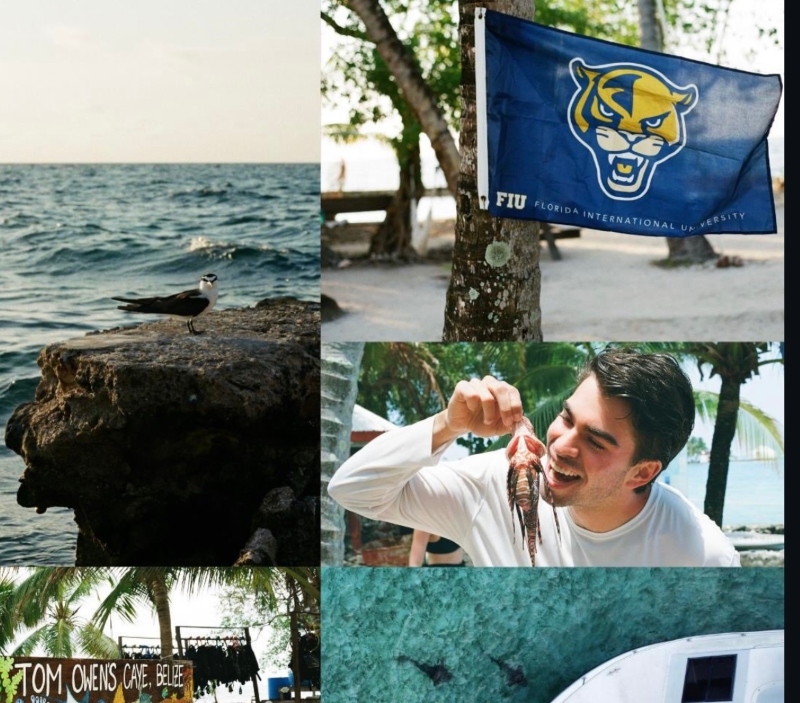
For one week in May, nine members traveled to Tom Owen’s Caye, a small island off the coast of Placencia, Belize, where they collaborated with Reef Conservation International (ReefCI), an organization dedicated to marine conservation and environmental education. Club president Amit Arbili, who had traveled to the island twice before, led the others on this self-directed, hands-on conservation enterprise. A mix of undergraduate and graduate students, they served as eco-volunteers and spent their days diving with purpose (their motto) as they practiced impactful environmental management and sustainability.
One huge issue facing the Belizean ecosystem is the overabundance of invasive lionfish, which can reproduce at a rate of about two million per year. Armed with three-prong spears, club members learned how to hunt and remove the lionfish without harming the corals and marine life around them, explains Arbili. They were also shown how to filet the lionfish for consumption, carefully cutting away the venomous spines along their fins. Herrero de la Cruz describes how club members would toss their scraps to nearby nurse sharks, hoping to introduce the troublesome fish as potential prey into the diets of these local predators, thereby encouraging population control.
In addition to spearfishing, club members devoted time to assisting propagation-efforts of a beloved local species: sea turtles. The island is home to a large population of these endangered creatures. Still, the rocky, limestone-based terrain can prove challenging for sea turtles to lay their eggs. Directed by ReefCI staff, club members assisted with nest preparation by replacing stone with sand in designated areas.
Through beach clean-ups to biodiversity identification dives, club members increased their knowledge, restored habitats and helped preserve the integrity of the world’s second largest reef system. “Everyone came with the same mindset – Leave no trace, only bubbles,” Arbili explains. For the double major in finance and international business, scuba diving is a hobby. And yet, organizing this trip, meeting new people and working to preserve the environment “made me fall in love with doing something with a purpose. [This trip] is part of my journey. You get to develop yourself and your skills and do something that’s outside of your comfort zone.”
Likewise, Herrero de la Cruz, an electrical engineering major interested in eco-friendly construction, discovered self-knowledge and community among fellow conservationists. “You can make friends in unlikely places. You don’t need to be working in the same field or have the same ideas about things to bond, find connection.” She adds, “I’m a huge advocate of people traveling. I think you learn so much about yourself when you’re outside of your regular environment.”
In this spirit, club members dove in and enjoyed exploring unfamiliar waters, rife with octopi, squid, nurse and lemon sharks, starfish and stingrays. While Herrero de la Cruz celebrates spotting a seahorse for the first time, Arbili smiles at the recollection of swimming with some of the more familiar marine mammals encountered on the trip. “It’s always nice to see dolphins. They’re spectacular,” he says.
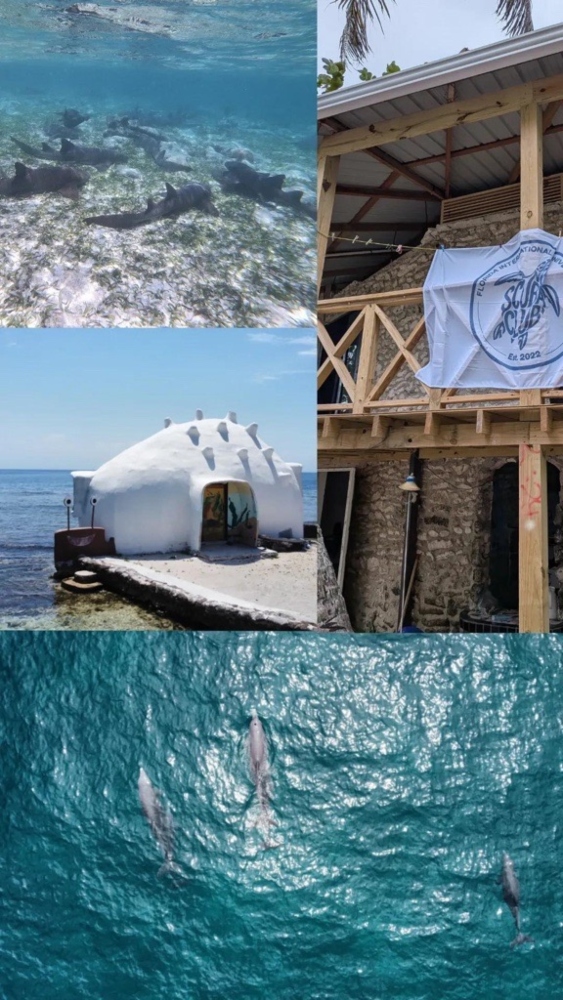
The Department of Campus Recreation worked with club members to provide support and resources and ensure a positive experience. As the first student-led international trip by an FIU sports club, the enterprise was primarily self-funded, although Campus Recreation helped cover the cost of accommodations.
Praising the initiative of the members in shaping their college experience and seeking out opportunities for learning, service and growth, Marcus St. Phard, the associate director of programs, student development and assessments, says, “They were extremely organized and focused on the right things: student success and development.
“Scuba Club is a really great group to be in because they care, love each other, support one another and provide great experiences. They are all great human beings.”